
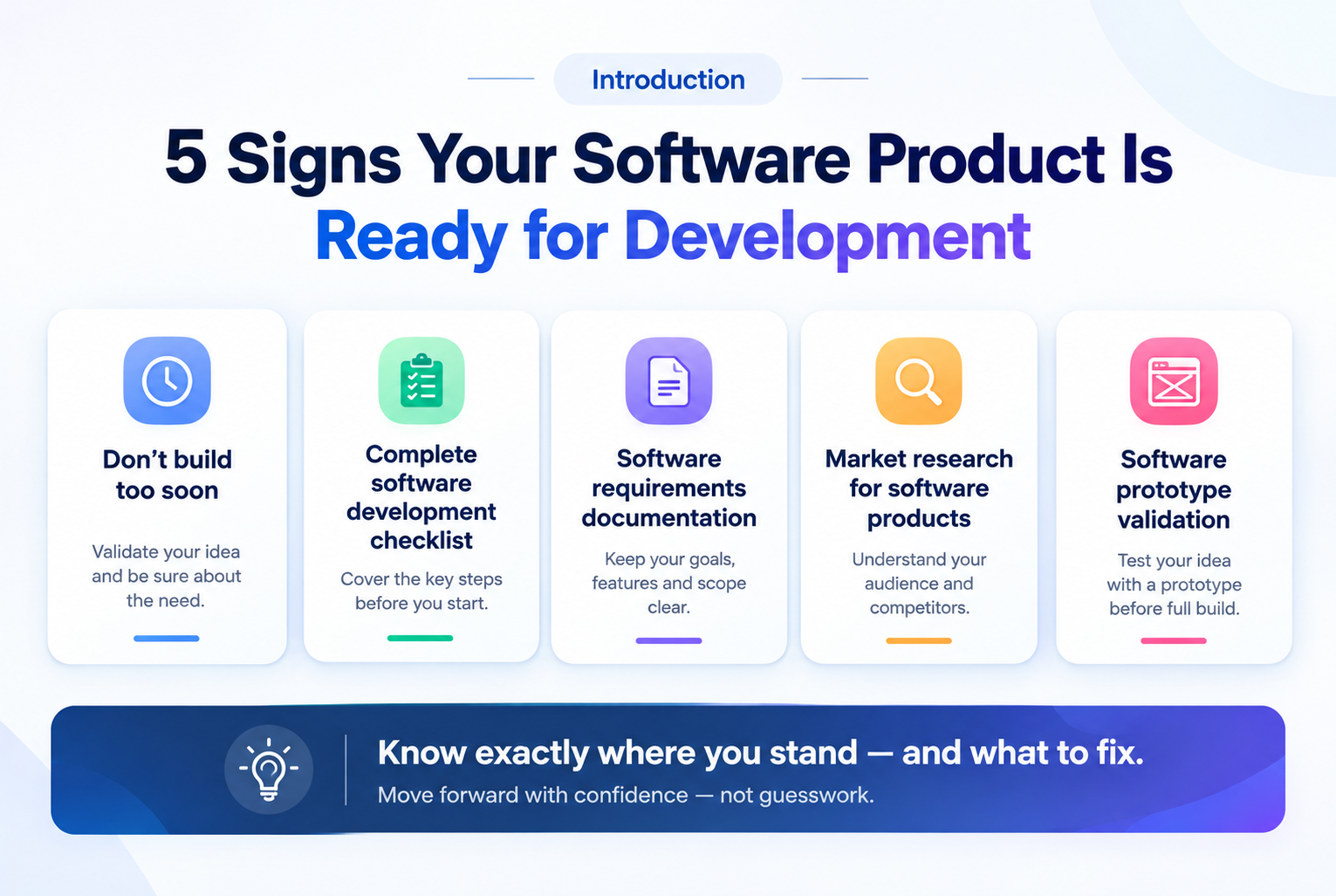
You have a software idea you're excited about — but how do you know it's actually ready to build? Jumping into development too soon is one of the most common (and costly) mistakes founders and product teams make.
This guide is for startup founders, product managers, and entrepreneurs who want to move forward with confidence — not guesswork. If you're trying to figure out when to start software development, you're in the right place.
We'll walk through five clear signs that confirm your software product development checklist is complete. Along the way, you'll learn why software requirements documentation matters more than most people think, how market research for software products protects your investment, and what software prototype validation actually looks like before you write a single line of code.
By the end, you'll know exactly where you stand — and what to fix if you're not quite there yet.
Your Vision and Goals Are Clearly Defined
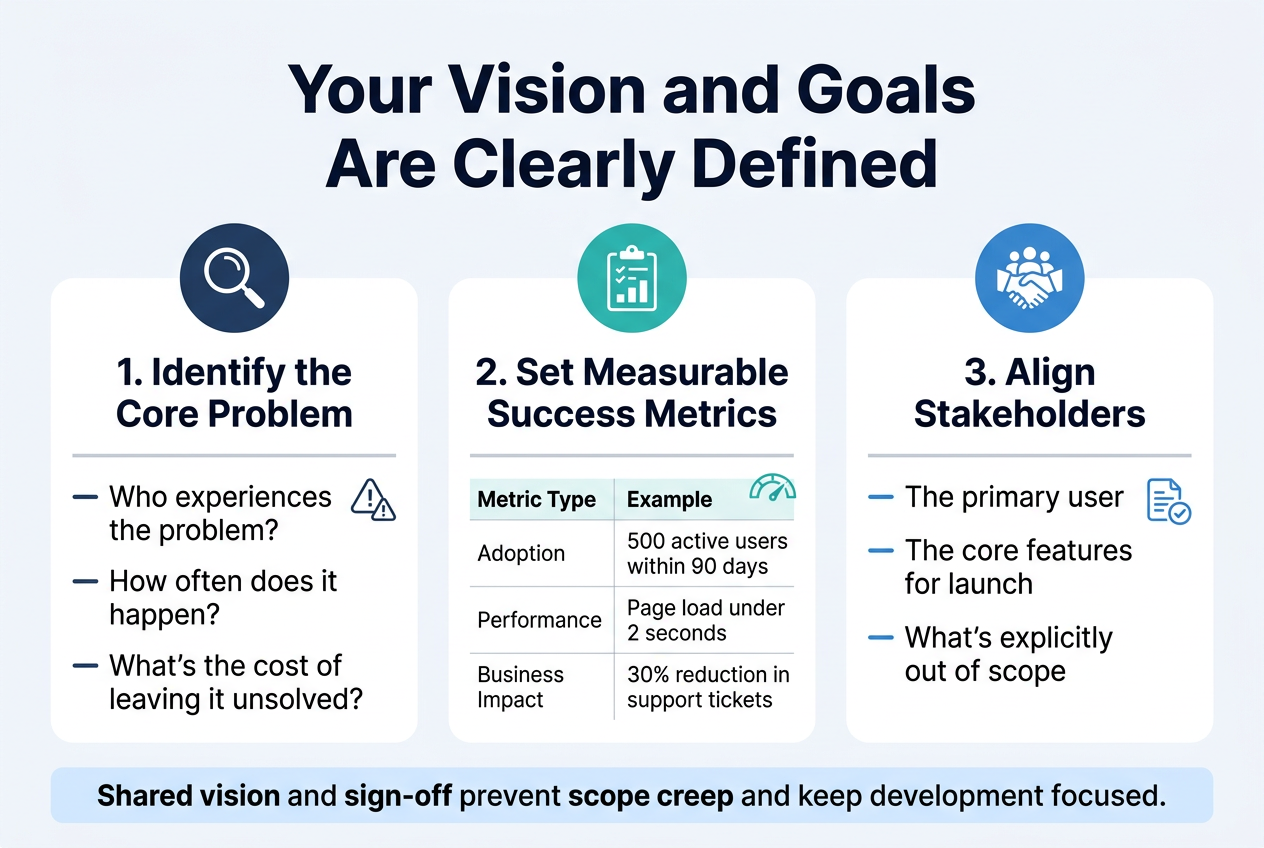
Identify the Core Problem Your Software Will Solve
Before a single line of code gets written, you need a crystal-clear answer to one question: What problem does this software actually fix?
Vague answers like "it makes work easier" won't cut it. Get specific:
- Who experiences the problem?
- How often does it happen?
- What's the cost of leaving it unsolved?
A sharp problem statement keeps your team focused and prevents scope creep before development even starts.
Set Measurable Success Metrics for Your Product
Knowing what "success" looks like is a core part of software development readiness. Define metrics upfront, such as:
| Metric Type | Example |
|---|---|
| Adoption | 500 active users within 90 days |
| Performance | Page load under 2 seconds |
| Business Impact | 30% reduction in support tickets |
These benchmarks guide development decisions and tell you when your MVP development readiness has actually been achieved.
Align Stakeholders Around a Shared Product Vision
Misaligned stakeholders are one of the biggest reasons software projects fall apart. Everyone — founders, developers, designers, and clients — should agree on:
- The primary user
- The core features for launch
- What's explicitly out of scope
Document this shared vision and get sign-off before moving forward.
Thorough Market Research Has Been Completed
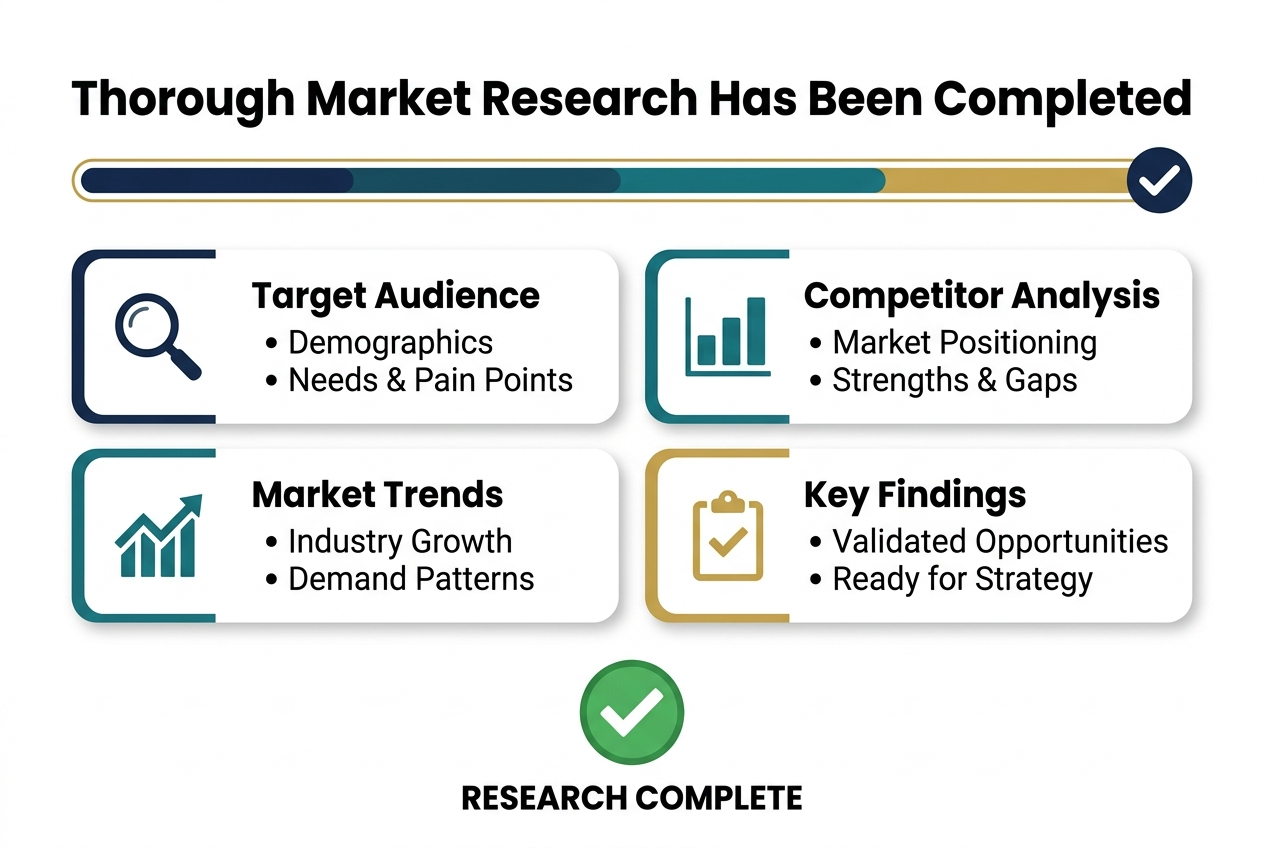
Validate Demand Through Target Audience Analysis
Before writing a single line of code, you need proof that real people want what you're building. Talk to potential users directly—surveys, interviews, and focus groups reveal pain points your product can actually solve.
- Identify your core user personas
- Map their daily frustrations and workflows
- Confirm willingness to pay for a solution
Analyze Competitor Products to Spot Opportunities
Study what's already in the market. Competitors aren't just threats—they're a roadmap showing you what users tolerate and what gaps remain unfilled.
| Factor | Your Product | Competitor |
|---|---|---|
| Key features | Custom | Generic |
| Pricing model | Flexible | Fixed |
| User experience | Intuitive | Complex |
Confirm Your Unique Value Proposition Stands Out
If you can't explain in one sentence why someone should choose you over alternatives, your positioning needs more work. A sharp UVP keeps your development team focused and your marketing message clear.
Use Data to Support Your Go-to-Market Strategy
Market research for software products should produce concrete numbers—market size, target segments, and adoption projections. This data directly shapes your MVP development readiness and gives stakeholders confidence that your software development planning is grounded in reality, not assumptions.
Your Requirements and Scope Are Well Documented
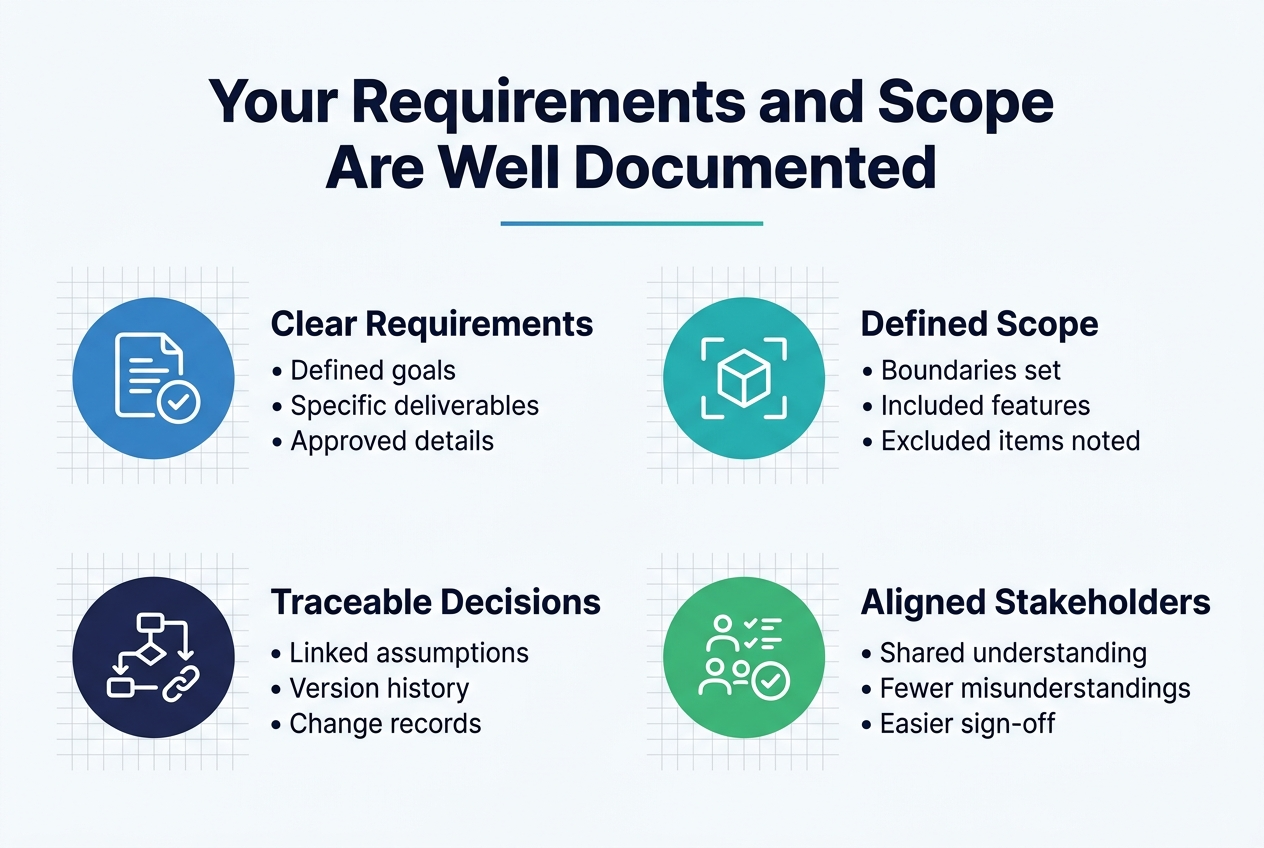
Create Detailed Functional and Non-Functional Requirements
Strong software requirements documentation is the backbone of MVP development readiness. Split your requirements into two categories:
| Type | Examples |
|---|---|
| Functional | User login, payment processing, data export |
| Non-Functional | Load time under 2s, 99.9% uptime, GDPR compliance |
Skipping this step leads to scope creep, blown budgets, and a product nobody asked for.
Define the MVP to Keep Development Focused
Your MVP isn't a stripped-down, broken version of your product — it's the smallest set of features that delivers real value to your core users. Ask yourself:
- What problem does this solve on day one?
- Which features are "must-haves" vs. "nice-to-haves"?
- What can wait for version 2.0?
Keeping this boundary tight is one of the clearest signs your software is ready for development — you know exactly what you're building first.
Establish a Clear Project Roadmap With Milestones
Break development into phases with defined checkpoints. A solid roadmap includes:
- Sprint goals tied to deliverables
- Testing milestones before each release
- Review points where stakeholders can give feedback
This keeps teams aligned and gives everyone a shared view of progress throughout the software development planning process.
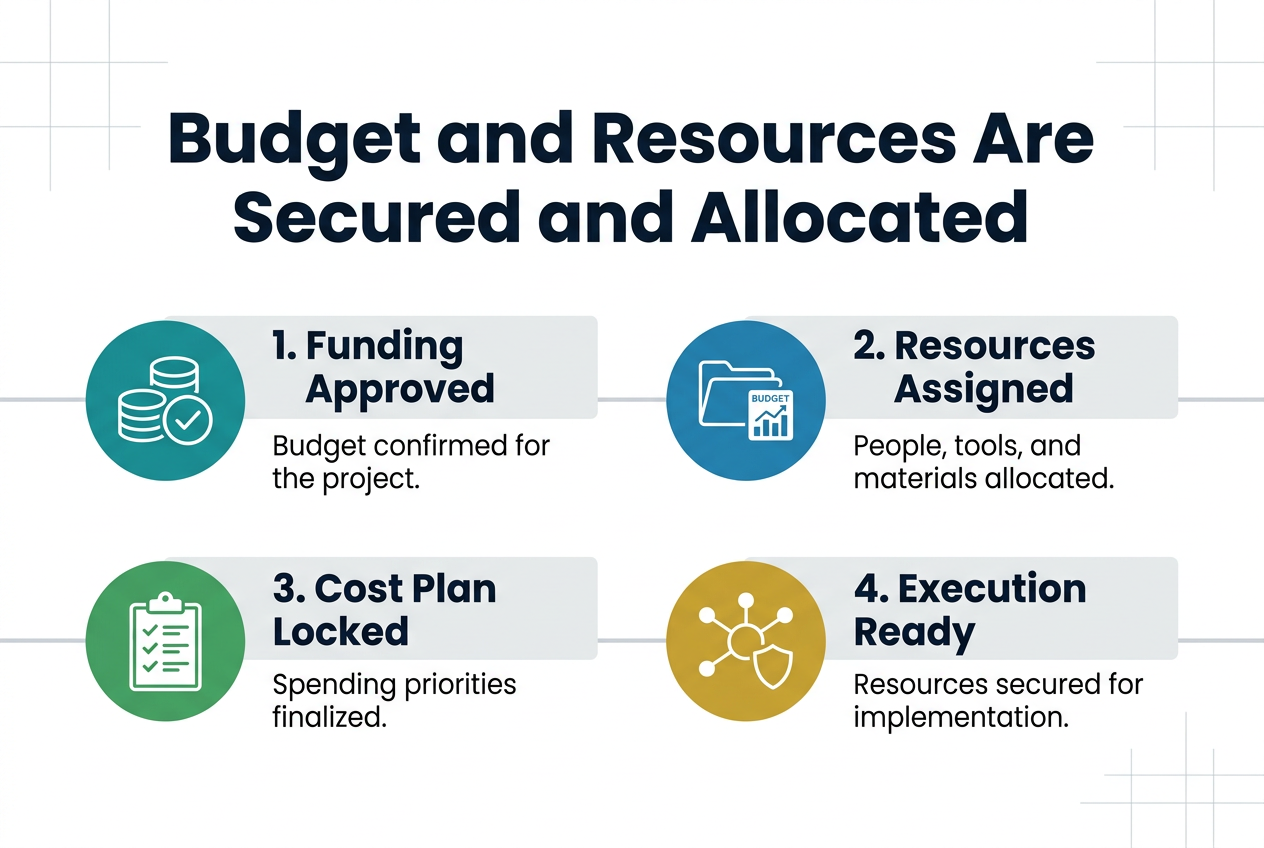
Budget and Resources Are Secured and Allocated
Confirm a Realistic Budget Covers Full Development Costs
A solid software development budget goes beyond just coding hours. Factor in:
- Design and UX work
- QA testing and bug fixes
- Third-party tools, APIs, and licenses
- Deployment infrastructure and hosting
Skipping any of these in your software development budget planning is a fast track to costly surprises mid-project.
Identify the Right Development Team or Partner
Whether you hire in-house or work with an agency, make sure the team has hands-on experience with your tech stack and product type. Check portfolios, talk to past clients, and clarify ownership of code and IP upfront.
Plan for Ongoing Maintenance and Post-Launch Support
Launching is just the beginning. Budget separately for:
- Security patches and updates
- Performance monitoring
- User-reported bug fixes
- Feature iterations based on real feedback
Post-launch support is often underestimated and can derail even well-funded products.
Mitigate Financial Risks With a Contingency Plan
Set aside 15–20% of your total budget as a buffer. Scope changes, technical challenges, and timeline shifts happen on almost every project. Having a contingency plan keeps the build moving without forcing rushed decisions or cutting corners on quality.
Prototypes or Wireframes Have Been Tested and Validated
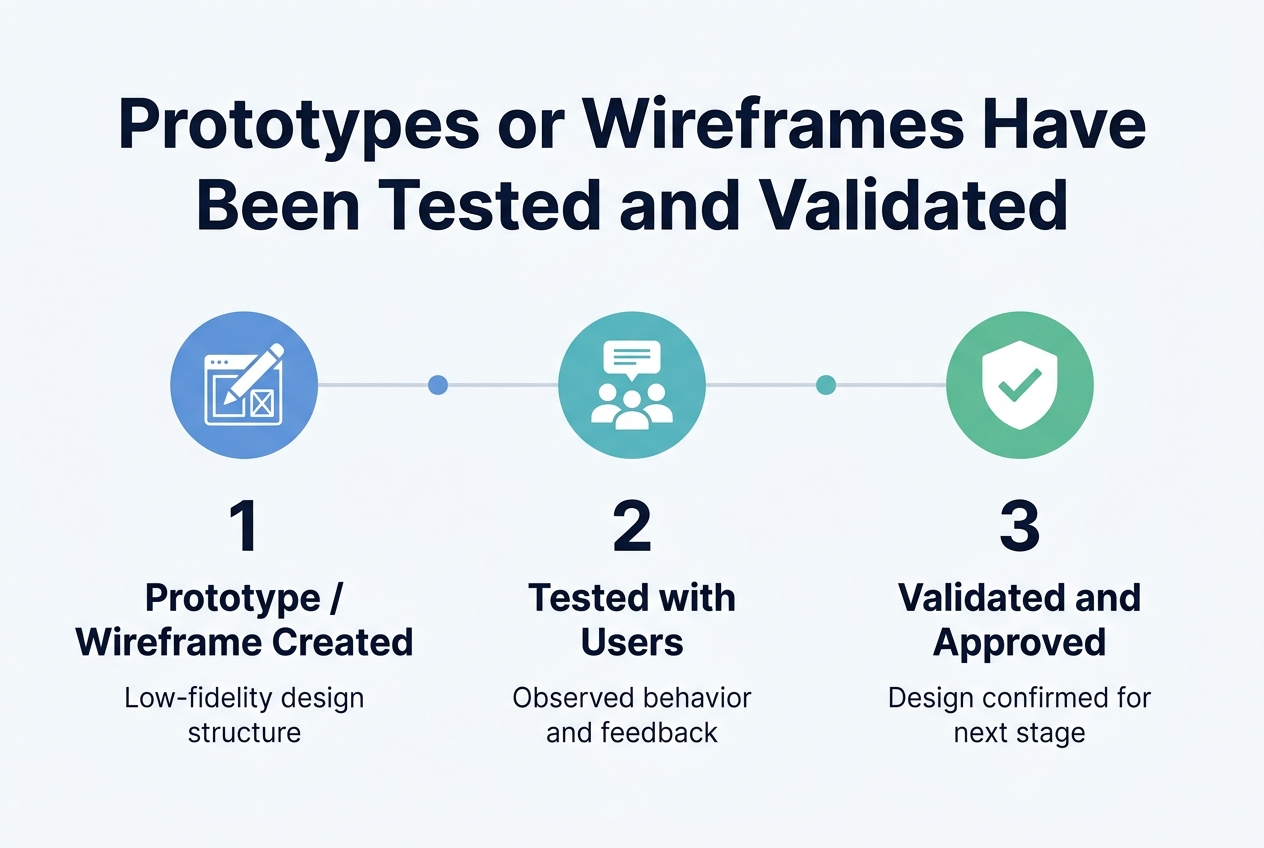
Use Prototypes to Gather Early User Feedback
Before writing a single line of code, getting a working prototype in front of real users is one of the smartest moves you can make. Prototypes and wireframes let you test your core ideas cheaply and quickly, catching problems that would cost ten times more to fix later. Software prototype validation at this stage is a strong signal of MVP development readiness.
Identify and Fix Usability Issues Before Development Begins
Real users will always surprise you. What feels obvious to your team often confuses first-time users. Watch where people get stuck, what they click by mistake, and what questions they ask. Track feedback and prioritize fixes based on:
- Frequency – How many users hit the same wall?
- Severity – Does it block the core task or just slow things down?
- Ease of fix – Can it be solved in the design, or does it need rethinking?
Confirm the User Experience Meets Audience Expectations
Your prototype should answer one key question: Does this feel right to the people you're building it for? Run usability tests with your target audience, not just internal stakeholders. If users can navigate core workflows without guidance, your software product development checklist is nearly complete and development can confidently move forward.
Conclusion
Getting a software product ready for development is not just about having a great idea—it's about doing the groundwork that sets your project up for success. From nailing down your vision and goals to completing market research, documenting requirements, locking in your budget, and validating your prototypes, each of these steps plays a big role in making sure your development journey runs as smoothly as possible.
If you can confidently check all five of these boxes, you're in a solid position to move forward. And if a few areas still need some work, that's okay too—taking the time to get them right now will save you a ton of headaches down the road. So before you dive into development, take a step back, revisit this list, and make sure your foundation is rock solid. Your future self (and your development team) will thank you.
Not sure if your product is really ready, or want a second opinion on your requirements and scope before you commit a budget? Talk to DotLinker — we'll help you pressure-test the foundation before development starts.
Not ready to start your project yet?
Talk through your idea with a real engineer, or get a ballpark estimate — both are free.